Tromsø's Sun Sets on Friday and Won't Rise Again for 48 Days. Here's What That Trip Actually Looks Like
On 27 November 2026 the sun in Tromsø rises at 11:20 and sets at 11:42, and the next sunrise is on 15 January 2027. Here is how dark it really gets, what a new hotel tax changes and how to plan your aurora nights.
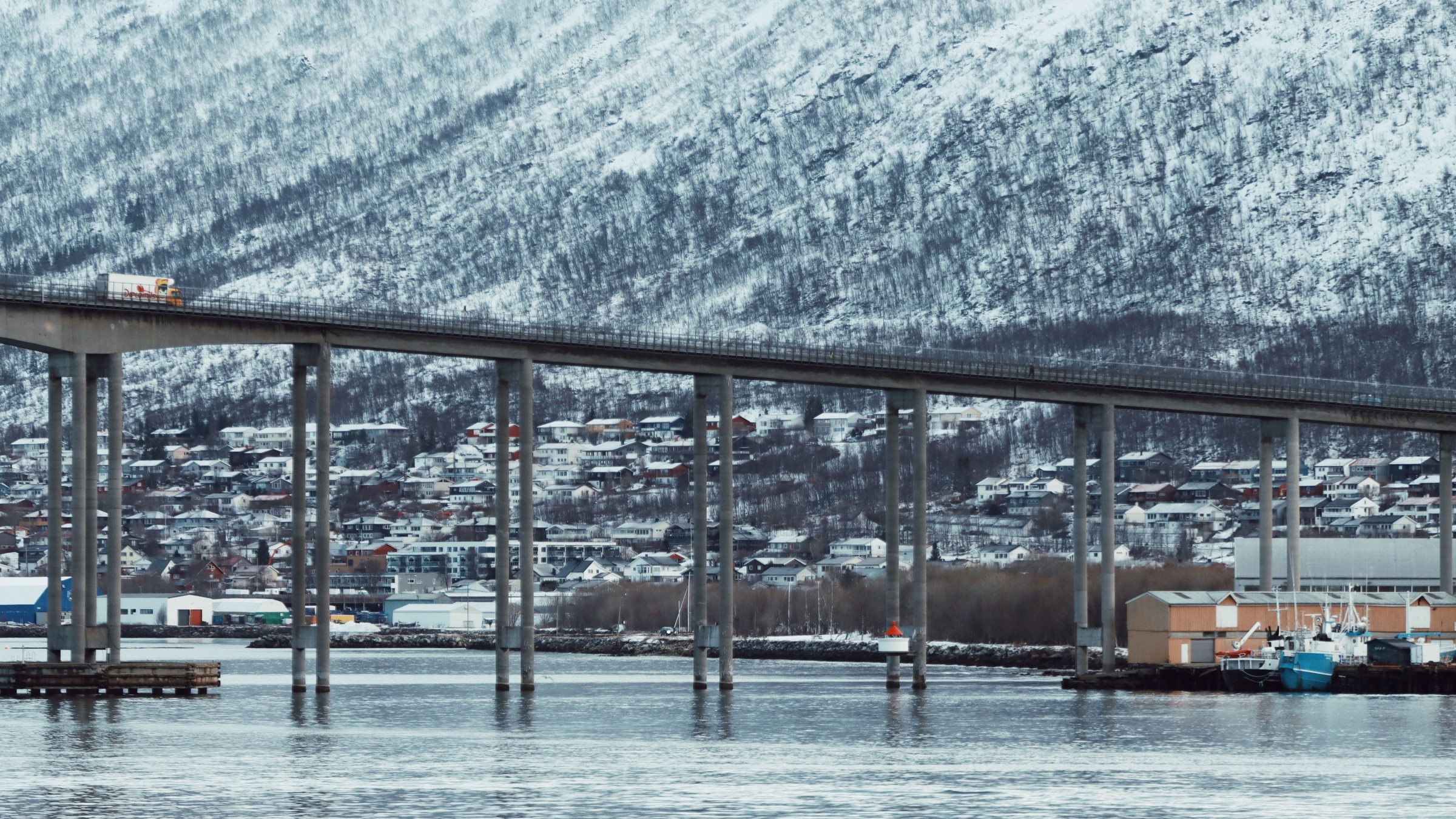
On Friday, 27 November 2026, the sun will climb over the horizon in Tromsø at 11:20 and slip back under it at 11:42. Twenty-two minutes of sun. Then nothing. The next sunrise is on 15 January 2027, and it lasts 38 minutes (timeanddate, Tromsø November 2026; January 2027).
That gap is 48 days. Locals call it mørketid, the dark time, and it is exactly when the city fills up.
If you are thinking about a Tromsø trip this winter, most of what you read online is either a northern lights mood board or a packing list. This guide covers the parts that actually change your plans: how dark it really gets, why the sun "comes back" twice, a new hotel charge that starts on 1 January, and how to stop the aurora from becoming a one-shot gamble.
Polar night is not 24-hour darkness
This is the biggest misconception, and it matters for how you book your days.
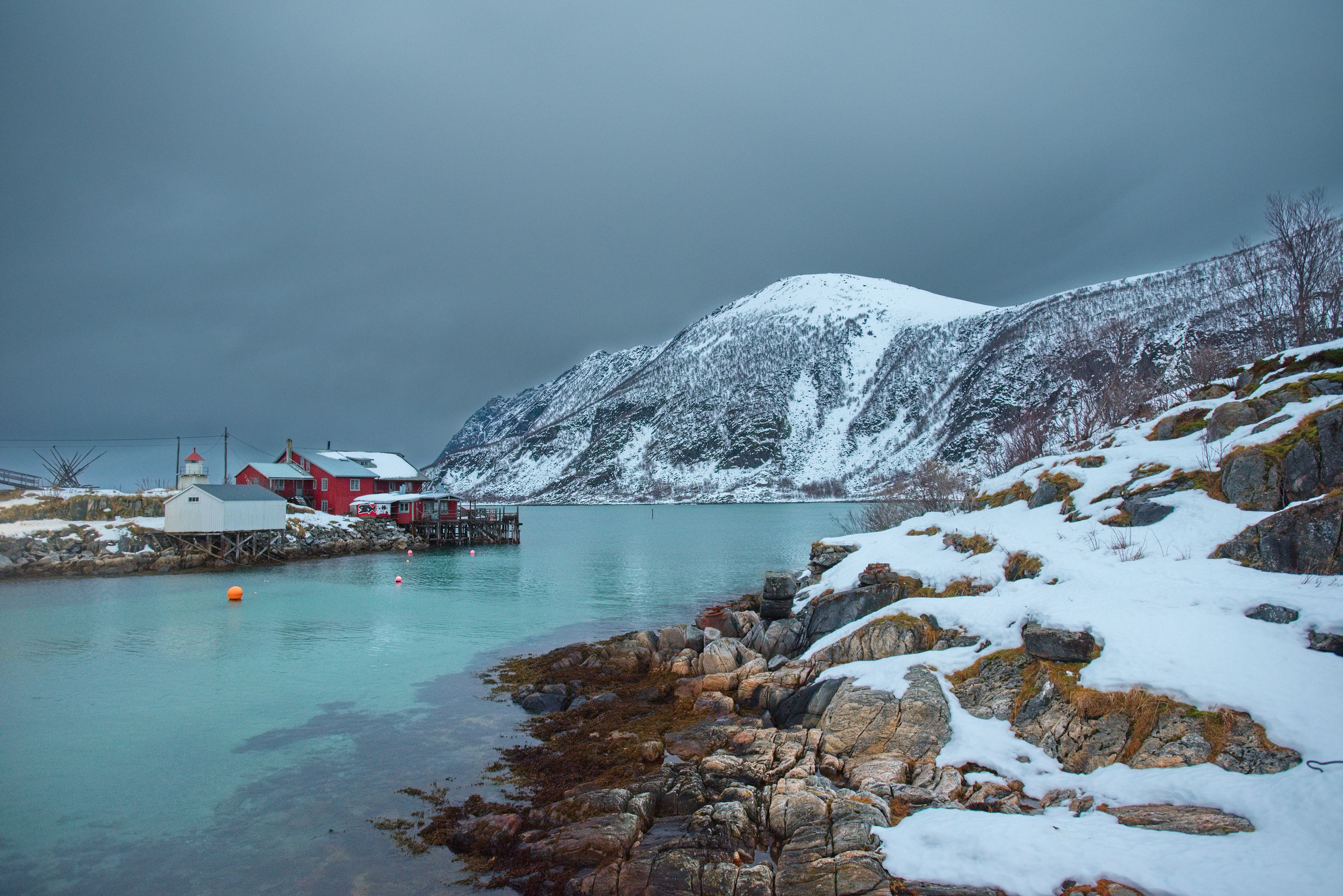
Midday in late November, after the last sunrise: the sun stays down, but the coast near Tromsø is still lit by a long blue twilight.
During polar night the sun stays below the horizon, but in Tromsø it does not go far below. On 21 December, the darkest day, the sun bottoms out at 2.3 degrees under the horizon at 11:42. That is enough for a long, blue civil twilight from about 09:31 to 13:53, roughly four hours and twenty minutes of usable light (timeanddate, December 2026).
Visit Tromsø describes it the same way: the sun never rises, "it never gets completely dark here during the daytime," and the sky is often streaked with pastel pink and blue (Visit Tromsø).
What this means in practice:
Anything scenic (fjord drives, a cable car view, whale-watching boats) belongs between roughly 10:00 and 14:00.
Afternoons are for museums, food and rest, because you will be up late.
By 15:00 in December it is properly dark, and aurora tours start in the evening.
Our honest opinion: the twilight is the underrated half of this trip. People fly in for the green lights and leave talking about the midday sky.
The sun returns on 15 January. You won't see it until the 21st
Here's the detail most guides skip. The sun technically rises again on 15 January 2027. But mountains to the south of the city block that first low sun, so it isn't visible from the centre until 21 January (Arctic Norway).
That day is Soldagen, Sun Day. People head to viewpoints, and the city eats solboller, a yellow custard bun made for the occasion. If you want a reason to pick January over December, this is a good one: you get the polar night feel in the first half of the month and a city-wide celebration of the light at the end.
Two other January dates worth knowing, per the same Arctic Norway calendar:
The Tromsø International Film Festival runs around mid-January.
The Northern Lights Festival, a week of classical and contemporary music, runs from late January into early February.
The numbers behind the crowds
Tromsø is no longer a niche Arctic stop. It is one of the busiest winter destinations in northern Europe, and the data shows it.
1,306,969 commercial guest nights in 2025, up 10.3% on 2024. Foreign guest nights grew 20.7% to 768,570. That count excludes Airbnb-style rentals, so the real number is higher (Visit Tromsø statistics 2025).
In the winter of October 2025 to March 2026, Tromsø took 44% of the roughly 400,000 foreign hotel nights across all of Northern Norway (Kunnskapsbanken for Nord-Norge, Nov 2026).
The same report counts 716,000 passengers on international flights to and from Northern Norway that winter, more than four times the level of three years earlier, with 90% of it through Tromsø airport.
And 30% of aurora travellers staying in Tromsø or Lofoten said at least one place felt overcrowded.
So the Arctic you see in photos is real, but so are the queues. December, especially around Christmas and New Year, is listed as "very high" hotel occupancy all month (Arctic Norway).
The new charge on your hotel bill from 1 January 2027
Norway's government approved Tromsø's visitor contribution plan on 28 October 2026. Tromsø, Vågan (in Lofoten) and Stranda (which includes Geiranger) are the first three municipalities in the country allowed to charge it (regjeringen.no press release).
How it works:
3% of the room price, excluding breakfast and VAT.
It applies to all overnight stays from 1 January 2027, including bookings that were already confirmed before the rule existed.
It covers hotels and short-term rentals. Meals, activities and other services are not included in the base.
A hotel within Tromsø municipality gives a worked example: a NOK 2,500 room (before VAT and breakfast) adds NOK 75 a night, or NOK 225 for three nights (Sommarøy Arctic Hotel). The ministry says the money goes to local services strained by visitor numbers.
It is not a huge amount. But if you are splitting a trip across New Year's Eve, the nights before 1 January are not charged, and the ones after are. Worth knowing before you compare two "identical" quotes.
Aurora odds: buy nights, not a single tour
The tourist board is clear that the Tromsø region sits directly under the auroral oval, and that the lights can appear any time of night, most often between about 20:00 and 02:00 (Visit Tromsø). The season runs from late August to early April.
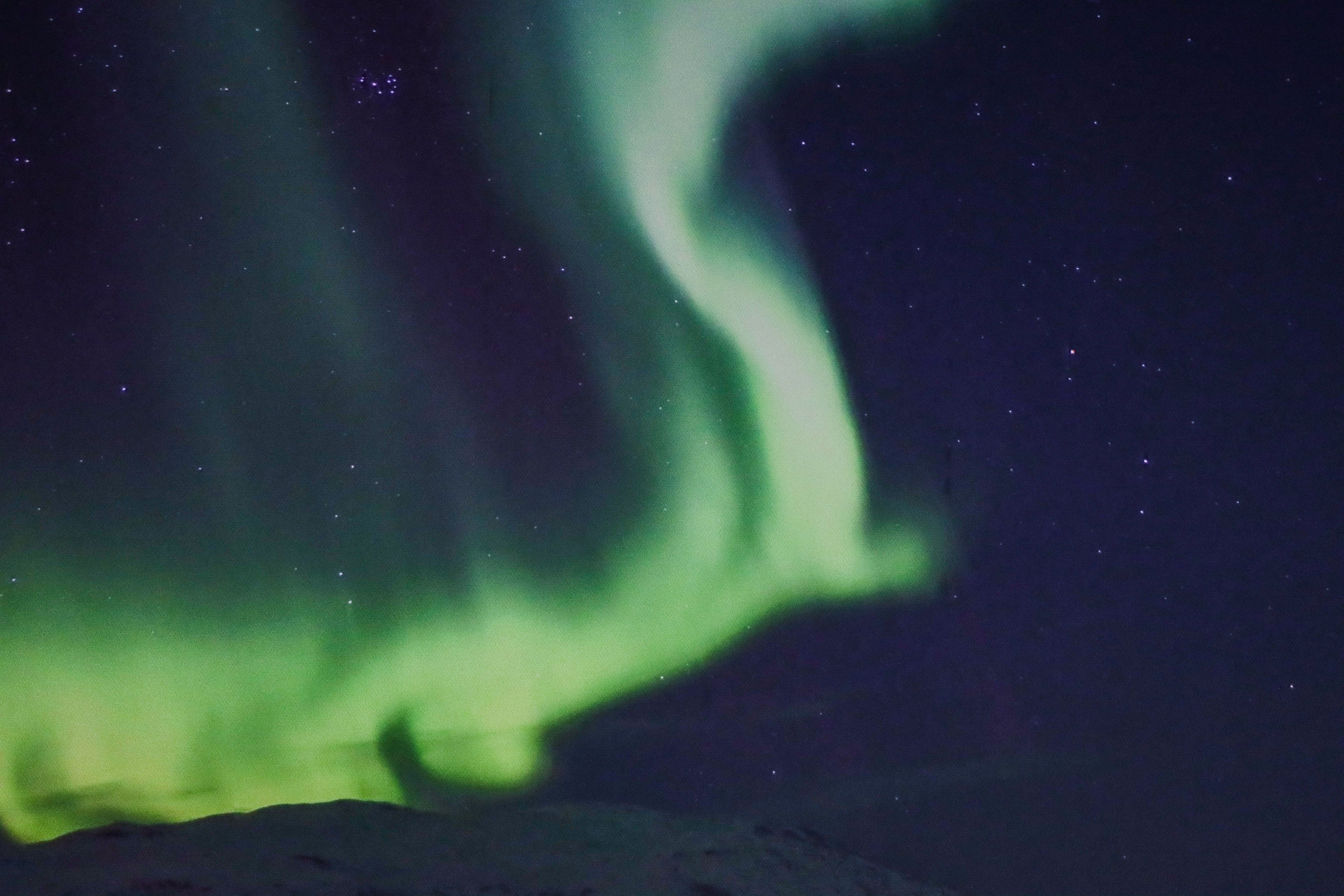
Northern lights over a snowy ridge in the Tromsø region. December nights are long, but cloud cover is the real gamble.
The limiting factor is not darkness in December. It's cloud. You have the longest nights of the year and some of the least reliable skies, which is why a single-night plan is a gamble.
What we'd do:
Stay at least four nights. Every extra night is another roll of the dice on weather. Visit Tromsø says the same thing in plainer words: the more nights you spend here, the better your odds.
Book the hunt early in your stay. If night one is cloudy, you still have room to try again without rearranging flights.
Pick a chase, not a spot. The board separates "hunts" by bus or car, which drive toward clear sky, from "experiences" like dog sledding with the aurora as a bonus. In December, the chase is the safer buy.
Use licensed, registered guides. The Kunnskapsbanken report notes a wave of unregistered operators in the region, with several people expelled from Norway for illegal tourism work. Ask for a Norwegian company registration before you pay.
One more thing the board points out: high solar activity has little effect directly under the oval, so you don't need to chase "solar maximum" headlines for Tromsø. Clear sky is what you need.
Cold, but not the cold you are imagining
Tromsø sits on the coast and the Gulf Stream keeps it milder than its latitude suggests. Average temperature is about –1.7°C in December and –3°C in January, according to Arctic Norway's month-by-month guide. The real problems are wind, ice on pavements and wet snow.
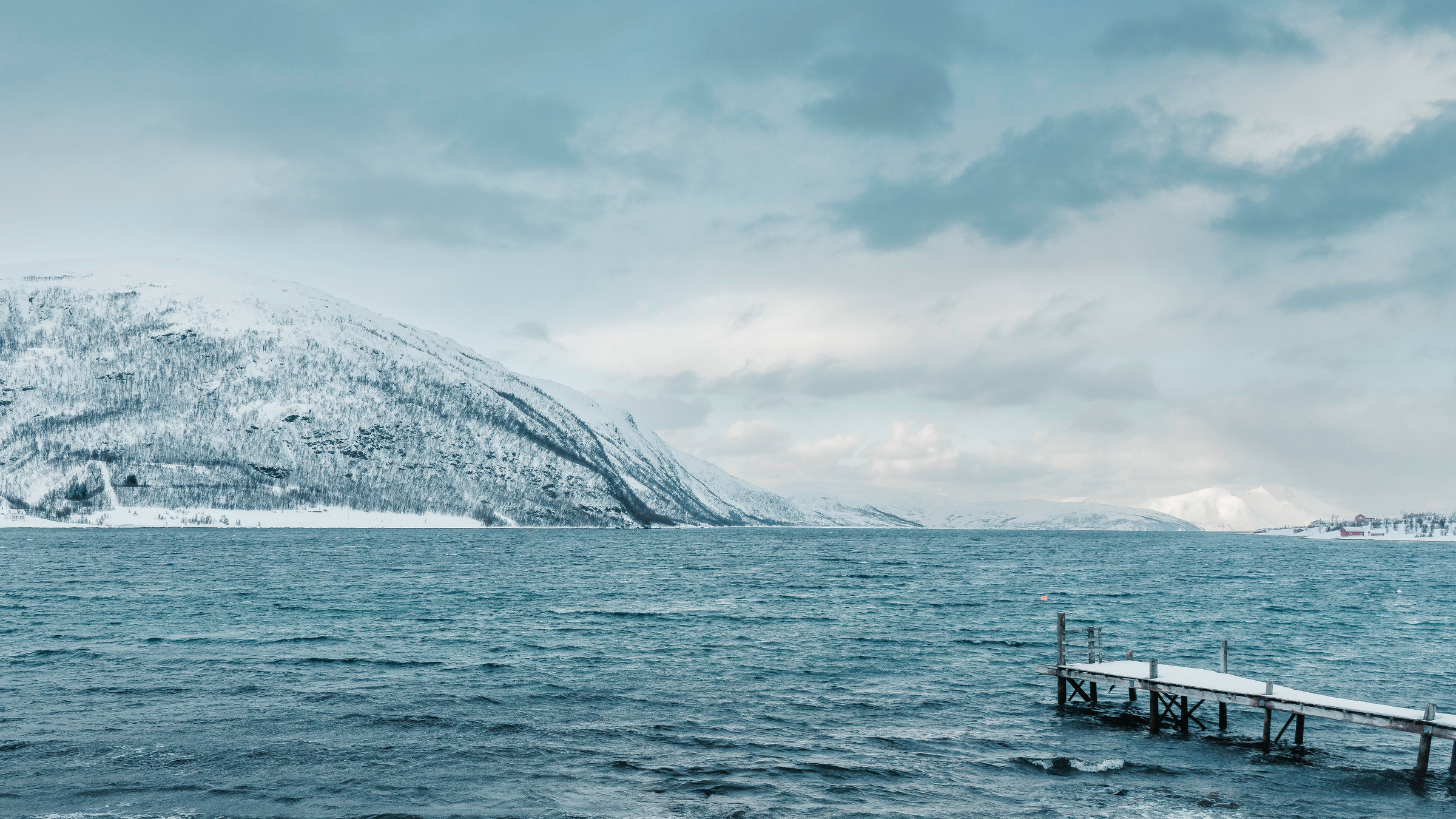
A winter fjord near Tromsø. The Gulf Stream keeps the coast milder than the latitude suggests; wind and ice on the paths are the harder part.
What to pack, based on the same guide:
Woollen base layers (top and bottom)
A warm hat, mittens rather than gloves, and a scarf
Winter shoes with rubber soles
Ice spikes or crampons that slip over shoes, because the hills in the centre get slick
A headlamp
Thermal suits are usually included on organised night tours, but check before you book.
If you are flying in from the Gulf or the Levant, a 30°C swing in one day is the hardest part. Give yourself an easy first evening.
Holiday dates that catch people out
Christmas in Norway is a family affair. According to Arctic Norway, shops and restaurants close on 24, 25 and 26 December, and social life only wakes up again on the evening of the 26th. Book dinners and tours for 23 to 26 December and for 31 December to 1 January well in advance. New Year's Eve has fireworks fired from the mountain by the cable car.
If you land on the 24th with no dinner booked, you are eating from the hotel minibar.
So, December or January?
Sunrise: December 2026, none all month. January 2027, returns 15 Jan, visible in town 21 Jan.
Twilight on the darkest day: December 2026, about 4h20m (21 Dec). January 2027, growing daily.
Average temperature: December 2026, about –1.7°C. January 2027, about –3°C.
3% visitor charge: December 2026, not charged. January 2027, charged on every night.
Crowds: December 2026, very high, peaks at Christmas. January 2027, very high in the city.
Events: December 2026, Christmas lights, New Year fireworks. January 2027, film festival, Sun Day, Northern Lights Festival.
Our pick: the first ten days of December if you want true polar night and slightly lighter crowds before the holidays, or the week of 15 to 22 January if you want to watch the light come back and see the city celebrate it.
Quick planning checklist
Book flights and rooms now. December is already "very high" occupancy.
Plan your sightseeing for 10:00 to 14:00. Treat it as your daytime.
Budget for the 3% charge on every night from 1 January 2027.
Reserve four nights or more if the aurora is the main goal.
Lock in Christmas and New Year meals before you fly.
Pack ice spikes. Seriously.
You can compare flights to Tromsø (TOS) and hotels for your dates on Skypz, and pick up a Skypz Travel eSIM before you go so your phone works the moment you land, which helps when the tour pickup changes at 19:00 because the clouds moved.
Forty-eight days without a sunrise sounds bleak on paper. In person, it is pink skies at noon, green ones at midnight, and a whole city counting down to one bun-flavoured Thursday in January.
Sources
Arctic Norway: Twelve Shades of Arctic Light, how Tromsø changes through the year
Regjeringen.no: Tromsø municipality may introduce visitor contribution (28 Oct 2026)
Related
- Aqaba in winter: warm sea, quiet beaches and easy weekends from Amman — Daytime highs around 21°C and a sea that stays swimmable. How to spend a long weekend by the Red Sea, and when to add Wadi Rum or Petra.
- Petra and Wadi Rum in winter: the season locals quietly prefer — Cooler days and fewer crowds. How to plan three unhurried days between Wadi Musa, the rose-red city and the desert, and what to pack for cold nights.
- Venice raises its hotel tax and brings the day-visit fee back in 2027 — On 20 November the city executive approved a higher overnight tax and a 72-day season of the access fee. Here is what that means if you are travelling from Jordan.
- Winter city breaks in Europe from Amman, now that Vienna is direct — A Schengen visa is still required. With a new four-times-weekly flight to Vienna, here is how to think about dates, cities and a two-stop week in the cold months.
- Istanbul and Cappadocia in winter: a six night route that just works — Jordanian passports are visa-free for Türkiye. Here is a six-night winter route through Istanbul and Cappadocia, and what to know about balloon flights in the cold months.
- Europe's new border checks: what EES means for your next trip — Fingerprints and a photo now replace the passport stamp at Schengen borders. ETIAS is still not live. Here is what actually applies this winter.